Andy Reilly, who received a BSA Small Grant to support his archival research, offers a summary of how the scheme helped him to advance his current research project.
With the generous support of the BSA Small Grants Fund, I conducted a research trip to the British Library and UK National Archives from January 6th to 11th, 2026. This trip formed an essential part of my ongoing project to prepare my doctoral thesis, which focuses on the publication of William Shakespeare’s Hamlet in the early eighteenth century, for publication as a monograph.
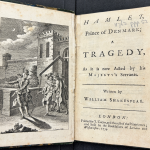
While at the British Library, I engaged in close material analysis of the library’s copies of single-text Hamlet editions published between 1710 and 1734. Consulting these books in person allowed me to analyse features that impact the reading experience, including type size, paper, and format.
During the day I spent at the National Archives, I consulted legal documents charting court cases and other arrangements undertaken by the publishers of some of these editions. These documents shed light on significant publishing decisions related to Shakespeare during this period and provide valuable historical context. Overall, this BSA-funded research trip has helped me significantly advance my project by giving me access to the rare books and archive records that underpin my analysis of Hamlet in publication in the early eighteenth century.
The next round of applications for the Small Grants Fund will close on 30th March 2026. BSA members in good standing are eligible to apply for the Small Grants Fund, which offers awards of up to £500 to fund a broad rance of activites. More information about the scheme and application instructions are available here: https://www.britishshakespeare.ws/bsa-small-grants-fund/
AI and Shakespeare: A British Shakespeare Association Virtual Conference (26-27 February 2026)
16th February 2026
In the interests of economy and inclusivity, the BSA will be meeting virtually in 2026 over two half days (26 – 27 February 2026, afternoon, GMT). It will be a chance to reflect upon and take stock of the explosive impact of AI on the Shakespeare community, from the perspective of research, performance, and education. The conference will be structured around opportunities and threats, or briefs and griefs. The conference will also include short round tables on AI and editing (with editors of Shakespeare, Shakespeare Quarterly and Adaptation), forthcoming research on Shakespeare and AI, and Shakespeare, AI and pedagogy. The keynote will be given by Jonathan Bate, ‘Love’s Labour’s Won: An Intelligent Artifice?’.
To attend, membership of the BSA is a requirement, otherwise, there are no conference fees.
After many years of leadership on the Shakespeare journal, Deborah Cartmell is stepping down as co-editor to concentrate more fully on her other journal, Adaptation (OUP). Professor Cartmell founded Shakespeare in 2005 and has been a co-editor ever since, working initially with John Joughin, Stuart Hampton-Reeves and Gabriel Egan, and with Lisa Hopkins, Brett Greatley-Hirsch and Tom Rutter. Hers has been the guiding hand in the growth and development of the journal and she has worked tirelessly on expanding its reach and ensuring the inclusion of fresh perspectives. She will be very much missed as a co-editor, but the remaining editors are happy that she will now be joining the editorial board. The BSA Board of Trustees thanks Professor Cartmell for her invaluable contribution to the success of the journal.
Todd Andrew Borlik is a Clinical Assistant Teaching Professor in the Cornerstone Program at Purdue University. He was formerly Professor of Shakespeare Studies at the University of Huddersfield and Assistant Professor of English at Bloomsburg University. He is the author of Shakespeare Beyond the Green World (2023), Literature and Nature in the English Renaissance (2019), and Ecocriticism and Early Modern English Literature (2011), along with numerous articles on Shakespeare and his contemporaries. He has co-edited a collection on The Winter’s Tale (with Peter Kirwan) and introduced the New Oxford Shakespeare edition of As You Like It. He is currently preparing a monograph on the ecology of magic on the early modern stage and co-editing (with Karen Raber) The Oxford Handbook of Shakespeare and the Natural World. He has been a long-time member of the BSA and served on the Shakespeare journal’s editorial board. The BSA Board of Trustees welcomes Professor Borlik as co-editor of the journal.
BSA Small Grants Fund: Events Reports
8th February 2026
The BSA’s Small Grants Fund supports a wide variety of projects. Two recipients of BSA’s SGF share reports about events that were partially funded by the schemebelow.
Revels Office: New Voices in Early Modern Material Culture, Theatre, and Performance
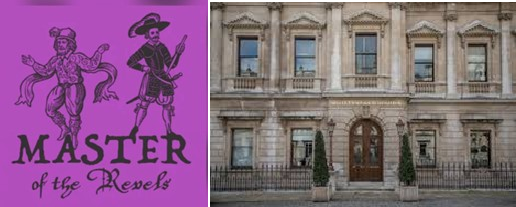
On Friday 13th June, the Revels Office Research Network, in collaboration with the Society of Antiquaries, held the ‘Revels Office: New Voices in Early Modern Material Culture, Theatre, and Performance’ conference at Burlington House. This hybrid event celebrated the work of early career scholars working on early modern material culture, theatre, and performance in Great Britain and Ireland (1500-1800).
The day encompassed rich reflections on matter and its meaning both inside and outside the playhouse. Papers investigated topics including cosmetics and race-making, costume, the senses, and performances of gender, power, and identity. The panel “Bibliographic Interests: Texts of and in Performance,” which was generously supported by the Bibliographical Society, was a particular highlight, with papers exploring the diary of Philip Henslowe, the early modern cue system, and the career of the printer John Danter. Professor Catherine Richardson FSA gave a fascinating keynote on her new book ‘Shakespeare’s Objects: Engaging the Off-Stage Lives of Early Modern Props’, in which she argued that a sustained engagement with the materiality of objects, the nature of props, and stage practice has a profound impact on the way in which we understand issues of identity and lived experience in the early modern period.
We hosted 45 in-person attendees, with 70 delegates participating online. Feedback from the day was enthusiastic, with attendees praising the ‘fabulous range of speakers’ who covered ‘a great spread of topics’. As an online network founded during the pandemic, this day was a special opportunity for the international Revels Office community to come together to share and celebrate research past, present, and future. The Revels Office would like to thank the British Shakespeare Association for their generous support of the conference.
By Bethan Davies
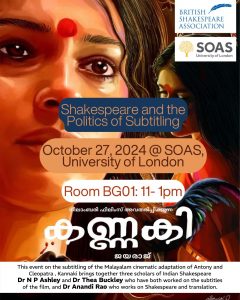
Shakespeare and the Politics of Subtitling
On 27 October 2024 ‘Shakespeare and the Politics of Subtitling’, a BSA Small Grants-funded event, took place at SOAS. The event brought together three Indian Shakespeares scholars: Dr Anandi Rao (SOAS) who works on Shakespeare and translation, and Drs N. P. Ashley (St Stephen’s College, U of Delhi) and Thea Buckley (QUB), who have both worked on the English subtitles of Kannaki, the film under discussion. An adaptation of William Shakespeare’s play Antony and Cleopatra, Kannaki is a 2002 Indian National Award-winning Malayalam-language tragedy written by Sanjeev Kilikulam and directed by Jayaraj R. Nair, who also participated online at this event as Guest Speaker.
‘Shakespeare and the Politics of Subtitling’ was attended by students, alumni, academics from UK and international universities, translators, and practitioners. The event was convened by Dr Anandi Rao, Lecturer in South Asian Studies at SOAS, University of London. Two academics had worked on the subtitles — NP Ashley, who recently translated The Comedy of Errors into Malayalam as part of his Kerala Shakespeares project, discussed drafting the first iteration of subtitles in an era before AI or auto translations and e-dictionaries. Dr Thea Buckley, who works on Indian Shakespeare in film, performance and translation, and is currently co-editing a special Shakespeare journal issue on Indian cinema, worked on the second draft of the subtitles and embedded these into selected clips from the film Kannaki.
The first part of the session involved a live audience Q&A with director Jayaraj, who appeared online from Kerala and explained the symbolism, narrated filming anecdotes and answered audience questions. Questions ranged from ‘Why Shakespeare?’ to how the lyrics, tunes, language(s) and linguistic setting of the film were chosen. The borders of India’s Southern states were decided after independence along linguistic boundaries. Thus, politics is automatically embedded in acts of choice of script, accent, metaphor, and dialogue in the case of this movie, set on the Kerala-Tamil Nadu border.
Next, N. P. Ashley and Thea Buckley discussed selected scenes from the film and the related challenges involved in subtitling these, from fitting lines onto a single row of onscreen text, and how to handle slang and words with double meanings, to whether to translate for literal sense or to privilege rhythm, metaphor or rhyme? Who is the subtitle for? Which audience? What acts of subalternity inhere? Who is included or excluded? Where does Shakespeare fit in and how is his work translated and re-translated in the act of scripting and Subtitling? Were some of the questions addressed.
The event concluded with screening more songs and scenes from the film, followed by discussing further reading and further directions of scholarship.
By Thea Buckley
Application for the SGF
BSA members in good standing are eligible to apply for up to £500 to support a wide range of activities. The next round of applications will close on 30th March. More details are available here: https://www.britishshakespeare.ws/bsa-small-grants-fund/
AI and Shakespeare: A British Shakespeare Association Virtual Conference
27th January 2026
In the interests of economy and inclusivity, the BSA will be meeting virtually in 2026 over two half days (26 – 27 February 2026, afternoon, GMT). This conference is organised by Professor Deborah Cartmell and Professor Lisa Hopkins.
The conference will be a chance to reflect upon and take stock of the explosive impact of AI on the Shakespeare community, from the perspective of research, performance, and education. The conference will be structured around opportunities and threats, or briefs and griefs. The conference will also include short roundtables on AI and editing (with editors of Shakespeare, Shakespeare Quarterly and Adaptation), forthcoming research on Shakespeare and AI, and Shakespeare, AI and pedagogy. The keynote will be given by Jonathan Bate, ‘Love’s Labour’s Won: An Intelligent Artifice?’.
To attend, membership of the BSA is a requirement, otherwise, there are no conference fees.
Image generated using Midjourney by Brett Greatley-Hirsch.
BSA Small Grants Fund
24th January 2026
Purpose:
The purpose of the BSA’s Small Grants Fund is to offer financial support to members of the BSA who wish to organize a Shakespeare-related event or conduct Shakespeare-related research. We especially encourage proposals from doctoral and early career researchers, teachers and educators, and creative practitioners.
Examples of eligible costs include:
Expenses associated with staging performances (e.g. costumes, props, accessibility aids)
Expenses associated with accessibility (e.g. sign-language interpreting for events or performances; fees paid for captioning videos)
Fees for online streaming / video platforms (e.g. Crowdcast, Zoom Premium, Vimeo)
Fees for video editing software (for filmed performances)
Funding to conduct research, such as travel to a library or archive
Digitization costs
Reproduction fees for images
Funding for conference attendance as a presenter
Travel expenses for unsalaried speakers / practitioners.
We welcome applications for awards of up to £500.
Eligibility:
You must be a member in good standing of the BSA (i.e. have paid your membership dues for the relevant period).
How to apply:
The next round of applications closes on 30 March 2026. Application instruction are available via the ‘Small Grants Fund’ icon on your BSA member’s dashboard after login.
Tribute to Andrew Jarvis (6 June 1947–16 November 2025)
9th December 2025
It is with great sadness that we record the death of actor and former Trustee of the BSA, Andrew Jarvis.
Andrew Jarvis’s skill and expertise embraces the entire range of activities associated with Shakespeare. He has been a member of the major acting companies in the UK, from his ten years at the RSC and his brilliant performance as Richard III in Michael Bogdanov’s highly innovative English Shakespeare Company’s production of The Wars of the Roses, through to two seasons at the National Theatre and performances from Sheffield Crucible to the Guildhall in King’s Lynn. His understudying of both roles in the National Theatre production of Harold Pinter’s No Man’s Land. played by Sir Ian McKellen and Sir Patrick Stewart, was acclaimed by them in rehearsals and the audience gave Andrew a standing ovation when Sir Patrick was ill and he stepped in to perform.
Andrew has also been a fine teacher of Shakespearean verse-speaking, at Mountview Academy, and in giving fantastic workshops for the for the British Shakespeare Association in the UK and at the other side of the globe, for the Australian New Zealand Shakespeare Association in Perth. Members of the BSA are deeply indebted to Andrew for the boundlessly enthusiastic and imaginative work he did as a Trustee for the BSA. This included a role as Chair of the BSA’s Honorary Fellowships Committee. He was, at the time of his death, busy planning an event in Kings Lynn, to follow the very successful 2019 conference there on Shakespeare in which he and Sir Ian McKellan both gave performances at the Guildhall. His funeral will be on 10 December at 2.30 and his wife Gillian has provided details here. Our thoughts are with her and her family. Andrew’s contribution to the BSA and to Shakespeare studies beyond has been phenomenal and we will miss him very much.
CfP: AI and Shakespeare (BSA Virtual Conference)
21st October 2025
AI and Shakespeare: A British Shakespeare Association Virtual Conference
In the interests of economy and inclusivity, the BSA will be meeting in 2026 virtually over two half days (26 – 27 February, 1.00 – 5.00 pm GMT). It will be a chance to reflect upon and take stock on the explosive impact of AI on the Shakespeare community, from the perspective of research, performance, and education, and the conference will be structured around opportunities and threats, or briefs and griefs. We welcome 5-10 minute presentations on any subject relating to Shakespeare and AI and short abstracts (circa 150 words) should be sent to Deborah Cartmell and Lisa Hopkins by 12 January 2026.
Routledge, who publish the BSA’s Shakespeare journal, have generously provided a discount code. Conference attendees may use code BSA24 to receive a 25% discount on print and e-books under the ‘Shakespeare’ subject category on www.routledge.com.
(Code is valid from 26th June until 11th September 2024.)
Attendees are expected to abide by the BSA’s Code of Conduct during the conference (as noted in the registration form).
A key aim of the BSA is to bring together a diverse membership of academics, teachers, students, practitioners, and members of the public from the UK and beyond in order to foster a better understanding of Shakespeare and his works. We strive to uphold a sense of community based on respect, understanding, and the principles outlined in our Equality, Diversity and Inclusivity policy. Therefore, the BSA takes seriously any instances of harassment or disrespectful behaviour in any of our activities or events, including in-person and online events, as well as interactions in BSA forums such as Board and Annual General Meetings. Harassment and disrespectful behaviour can take many different forms (manifested verbally, non-verbally, through physical actions, or digitally) and can include incidents such as: crude behaviour; unwanted physical contact or attention (sexual or otherwise); offensive gestures, statements, or jokes; dismissive or demeaning forms of address; threats; coercion.
The BSA condemns and will not tolerate behaviour that demeans, endangers, humiliates, or threatens an individual based on their sexual orientation, gender, race, disability, religious beliefs, age, or professional status, and would encourage anyone who is affected by any such behaviour to make it known to our organization confidentially via our EDI Trustee, Chair, or any other member of the BSA Board of Trustees whom the individual would feel comfortable approaching. The BSA reserve the right to take action, such as the revocation of BSA membership, against anyone who breaches our Code of Conduct and Sexual Harassment Policy.
Shakespeare Club of Stratford-upon-Avon Bicentenary Bursary
23rd April 2024
The Shakespeare Club of Stratford-upon-Avon was founded in 1824 and has claims to be the oldest Shakespeare society in continuous existence.
The Shakespeare Club of Stratford-upon-Avon Bicentenary Bursary has been set up to mark the 200th anniversary of its foundation.
An award of up to £300 will be made to undergraduate or postgraduate students, currently registered in a UK university, who require funds to enable research on a literary, theatrical, historical, or biographical topic about William Shakespeare. The bursary scheme will run annually from 2024 until 2026. The intent of the award is to enable and support students who wish to use Stratford’s specialist theatres, library and archival collections
Recipients of the bursary will be invited to present their research to the Shakespeare Club at one of its monthly meetings in Stratford- upon-Avon either in person or via a recording within a year of the award of the bursary.
Applicants should submit a letter of application (2 pages max.) that states:
The subject of the applicant’s research.
What the bursary will be used for (can include travel expenses, cost of research materials, theatre tickets, etc.).
How the bursary will contribute to the applicant’s research.
The applicant’s research profile, for example, previous publications, experience, and how you would use Stratford resources and collections.
The names of the principal library or archives where the applicant intends to work (if applicable).
The expected date of completion of the research.
The successful applicant promises to acknowledge the assistance of the bursary in both published and unpublished versions of the work to which it pertains with the following wording:
‘This work was in part made possible through the award of The ShakespeareClub of Stratford-upon-Avon Bicentenary Bursary.’
The deadline for applications is 30 June 2024, and the winners will be announced on 31 July 2024.
The adjudicators’ decision is final and no correspondence with individual applicants should be expected beyond an acknowledgement of the receipt of an applicant’s letter of intent and the announcement of the award on 31 July 2024.
We use cookies on our website to give you the most relevant experience by remembering your preferences and repeat visits. By clicking “Accept All”, you consent to the use of ALL the cookies. However, you may visit "Cookie Settings" to provide a controlled consent.
This website uses cookies to improve your experience while you navigate through the website. Out of these, the cookies that are categorized as necessary are stored on your browser as they are essential for the working of basic functionalities of the website. We also use third-party cookies that help us analyze and understand how you use this website. These cookies will be stored in your browser only with your consent. You also have the option to opt-out of these cookies. But opting out of some of these cookies may affect your browsing experience.
Necessary cookies are absolutely essential for the website to function properly. These cookies ensure basic functionalities and security features of the website, anonymously.
Cookie
Duration
Description
cookielawinfo-checkbox-analytics
11 months
This cookie is set by GDPR Cookie Consent plugin. The cookie is used to store the user consent for the cookies in the category "Analytics".
cookielawinfo-checkbox-functional
11 months
The cookie is set by GDPR cookie consent to record the user consent for the cookies in the category "Functional".
cookielawinfo-checkbox-necessary
11 months
This cookie is set by GDPR Cookie Consent plugin. The cookies is used to store the user consent for the cookies in the category "Necessary".
cookielawinfo-checkbox-others
11 months
This cookie is set by GDPR Cookie Consent plugin. The cookie is used to store the user consent for the cookies in the category "Other.
cookielawinfo-checkbox-performance
11 months
This cookie is set by GDPR Cookie Consent plugin. The cookie is used to store the user consent for the cookies in the category "Performance".
viewed_cookie_policy
11 months
The cookie is set by the GDPR Cookie Consent plugin and is used to store whether or not user has consented to the use of cookies. It does not store any personal data.
Functional cookies help to perform certain functionalities like sharing the content of the website on social media platforms, collect feedbacks, and other third-party features.
Performance cookies are used to understand and analyze the key performance indexes of the website which helps in delivering a better user experience for the visitors.
Analytical cookies are used to understand how visitors interact with the website. These cookies help provide information on metrics the number of visitors, bounce rate, traffic source, etc.
Advertisement cookies are used to provide visitors with relevant ads and marketing campaigns. These cookies track visitors across websites and collect information to provide customized ads.